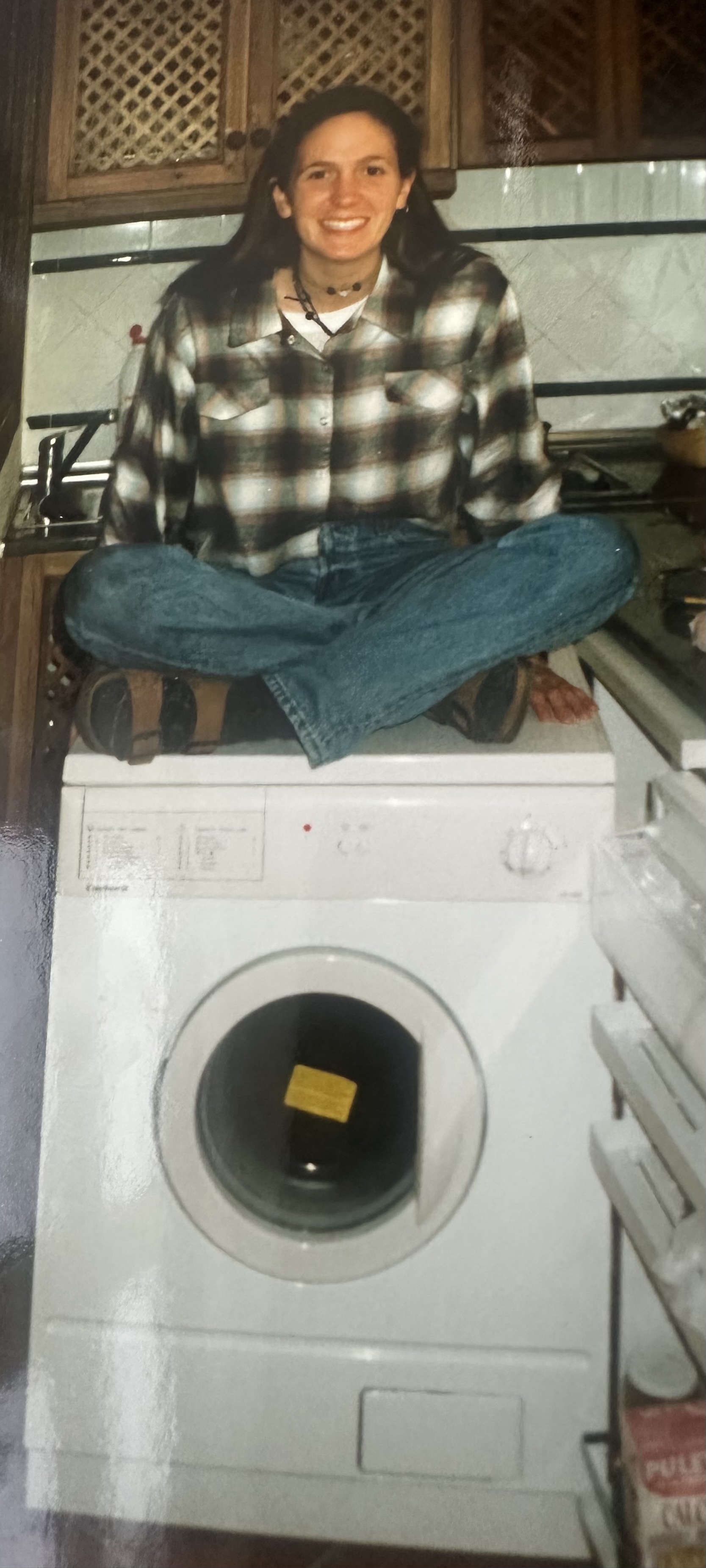
Me on my washing machine that took a short walk.
From two o’clock to three o’clock in the afternoon body parts or hair would be washed, alternating daily to save water. Luckily, my 100 pounds of muscle and bone didn’t need too much water to wash and then rinse body gel off its surface. Hair days were more difficult since my melena1 of thick brown hair rested just above my lower cheeks.
Pots would be filled with water to prepare my specialty meal as a poor student. My mother’s lentil stew with whatever available vegetable thrown in, plenty of garlic and those tiny red chilis I had miraculously discovered at the outdoor market. One pot was filled to do the cleaning after lunch when the water would already be turned off.
In the late evening by Spanish standards, meaning from 9 to 10 pm, we would have another opportunity for some H20. Since tapas were our standard for dinner as students, this hour was set aside for teeth and face washing reserves.
It is quite possible that we had an hour of water in the morning but we mostly likely slept through that , or my memory simply fails me. Not shocking.
The Spanish drought of 1991-1995 was possibly the worst for the country during the 21st century. By the winter of 1995 the water resources were down to 15 percent affecting the grand majority of the country. Only small areas of the Northwest (Galicia) and Bilbao were considered to be at “normal” precipitation levels.
As a first time study abroad student everything is different and you learn to just take things as they roll around you with an observant and flexible eye. Spain, and especially Granada, were quite different thirty years ago. You adjusted to what life was like here or bust. There were no cutesy “brunch” cafes or ice served in your beverage. A glass of water was served only when a coffee was ordered. (and as it still is in the best old school places) ¡Ya Esta! Go ahead and try to explain why you just want a glass of water randomly to hydrate yourself. Have a beer or vino, you big wimpy foreigner!
Your ankles still hung off the edge of every bed, even if you weren’t unusually tall. Years and years lacking in proper nourishment stunts the growth of a population.
Non-smoking signs from the years of the dictatorship hung in all public trains and busses while clouds of smoke from black tobacco or rolled cigarettes sprinkled with hashish clung to the closed windows.
The sight of men missing a limb or two, walking with a crutch, was extremely common. Painful and visible effects of a cruel civil war that left a country in poverty, forced to rebuild with little help from the outside world.
So when the water levels were dangerously low in December of 1995 and the severe restrictions were established, we just rolled with it. No hay agua, no pasa nada. No water, no worries. It was quite cold that year and we did not have heat in our apartment, so who cared about missing a shower or two?
Considering I was a student and not the owner of an olive grove or farm, my worries were quite innocent, possibly bordering on ignorant. For lack of knowledge, not lack of intelligence.
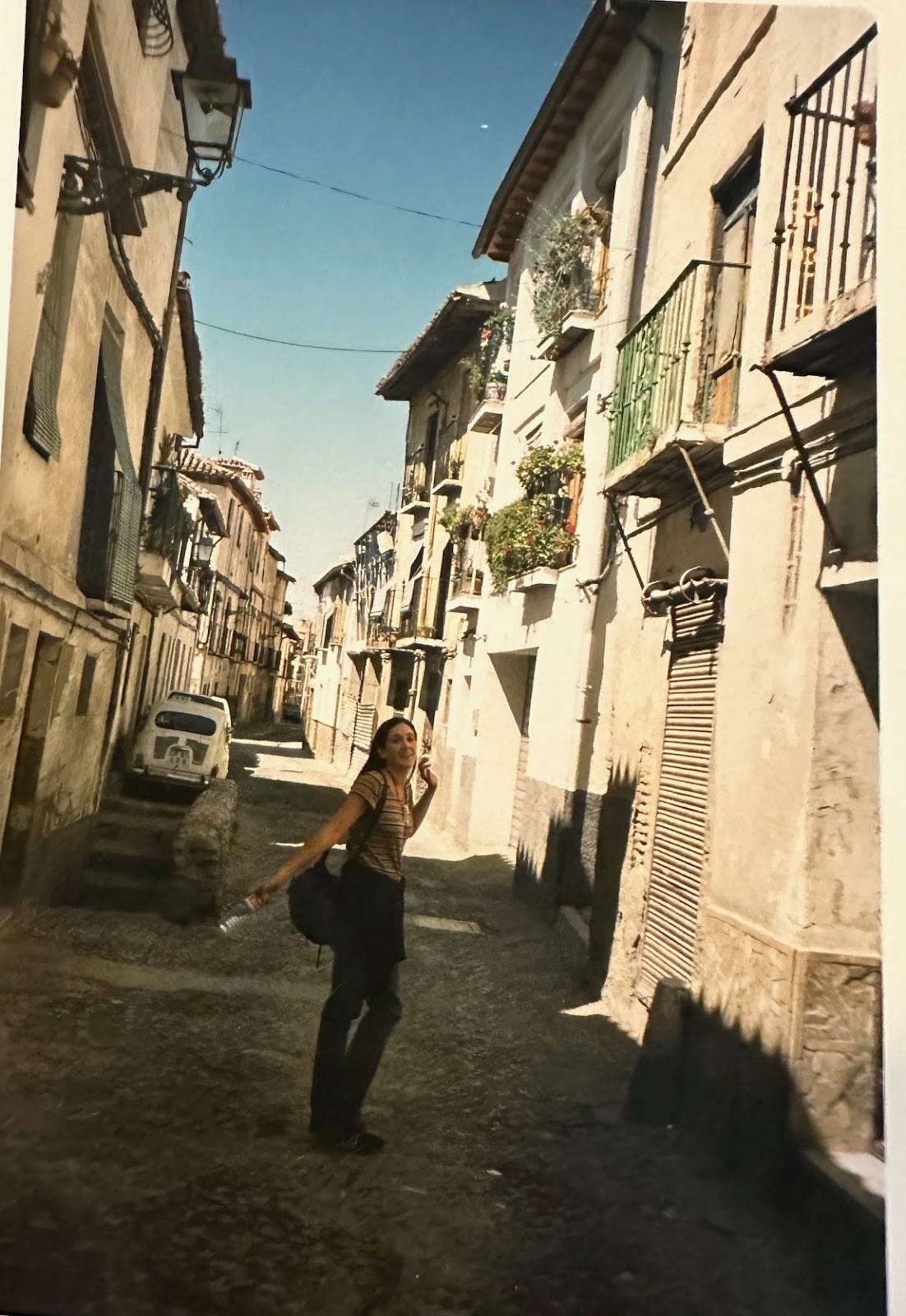
Then one day, when walking down my street known as La Calle de Las Prostitutas2, water started to fall from the sky and did not stop for at least four months. Forest Gump rain, “rain that flew in sideways”. That beautiful street, correctly named San Juan de los Reyes, turned into a small river that flowed perfectly down the center thanks to the genius Moorish inhabitants who built the neighborhood centuries ago. I would wander down to my classes in my raincoat, saying hello to the prostitutes as they set up their tables outside for morning business.
We have had other significant droughts during this century. One in the early 40’s, one in the mid 70’s and the drought of 2017 which was one of the driest years in history. But we never seem to be at any happy medium in Spain. We are either lacking water and putting out major forest fires, or we are drowning. The former happens more often.
All but one of the ten deadliest floods in Spain have happened in the month of October. Is this just a coincidence or is there a meteorological explanation for this? Anyone? Bueller?
In October 2024 I was on tour with a band of happy Rick Steves’ travelers when over 200 people lost their lives in the tragic floods in Valencia. We were in Andalucia where there was torrential down pouring and were obligated to spend a couple of days holed up in our hotel in Arcos de la Frontera where we used our time to gather resources to send to those who had just lost homes and loved ones.
In the past two weeks both Spain and Portugal have been bombarded by the raging storms named Harry, Ingrid, Joseph, Kristin and Leonardo. Marta is arriving today. Between Spain and Portugal, at least 6 people have lost their lives and one is still missing. Throughout Portugal over 900,000 were without power on Wednesday. My in-laws and cousins spent over 48 hours without electricity. Thousands have been evacuated from their homes.
My city of Granada and its surrounding towns is one of the areas most affected by the last storms. All of the residents were taken out of the town of Dúdar which is about a 10 minute drive from my house. They were moved to a hotel in the city until their homes can be accessed again, or what remains of them. Many of my friends are unable to leave their homes due to the raging water flowing through the streets in their towns. Most national roads have been closed for days along with our ski resort.
The Alhambra was closed for two days as were all schools and many businesses.
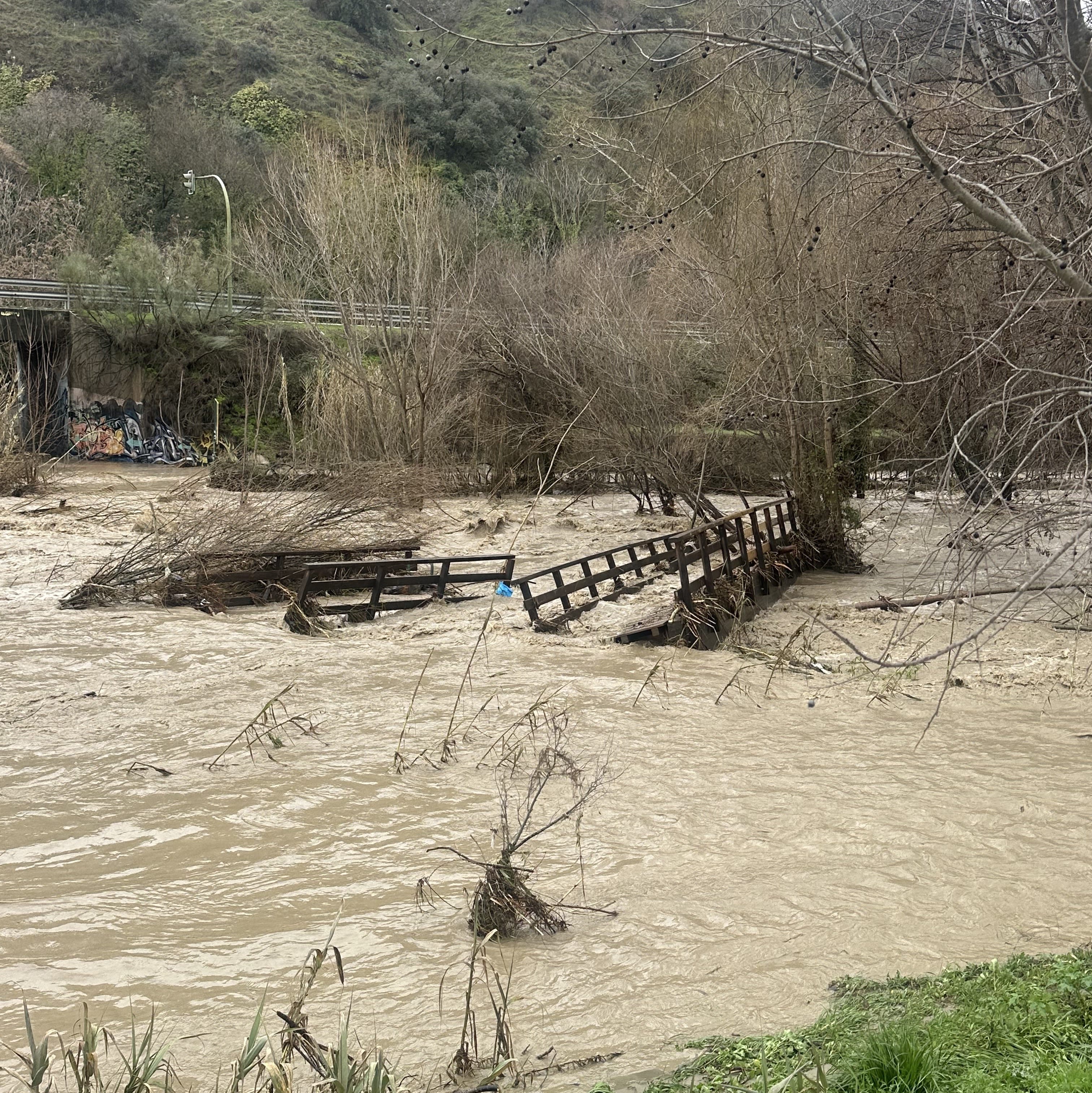
Yesterday we went for a walk along the Genil river which flows just behind my apartment building. It is my sanctuary, the place where I run or bike almost everyday of my life for thirty years. For the past couple of days, since the dams have been opened, it has become a local tourist event. Everyone stopping to take a video or photo of the rising level and force of the flowing water.
As we walked upstream along the river, the rain sprinkled lightly while a black cloud threatened us from behind. The sight of my running trail now turned into a river of muddy water and the complete destruction of both foot bridges that I cross everyday helped for reality to set in.
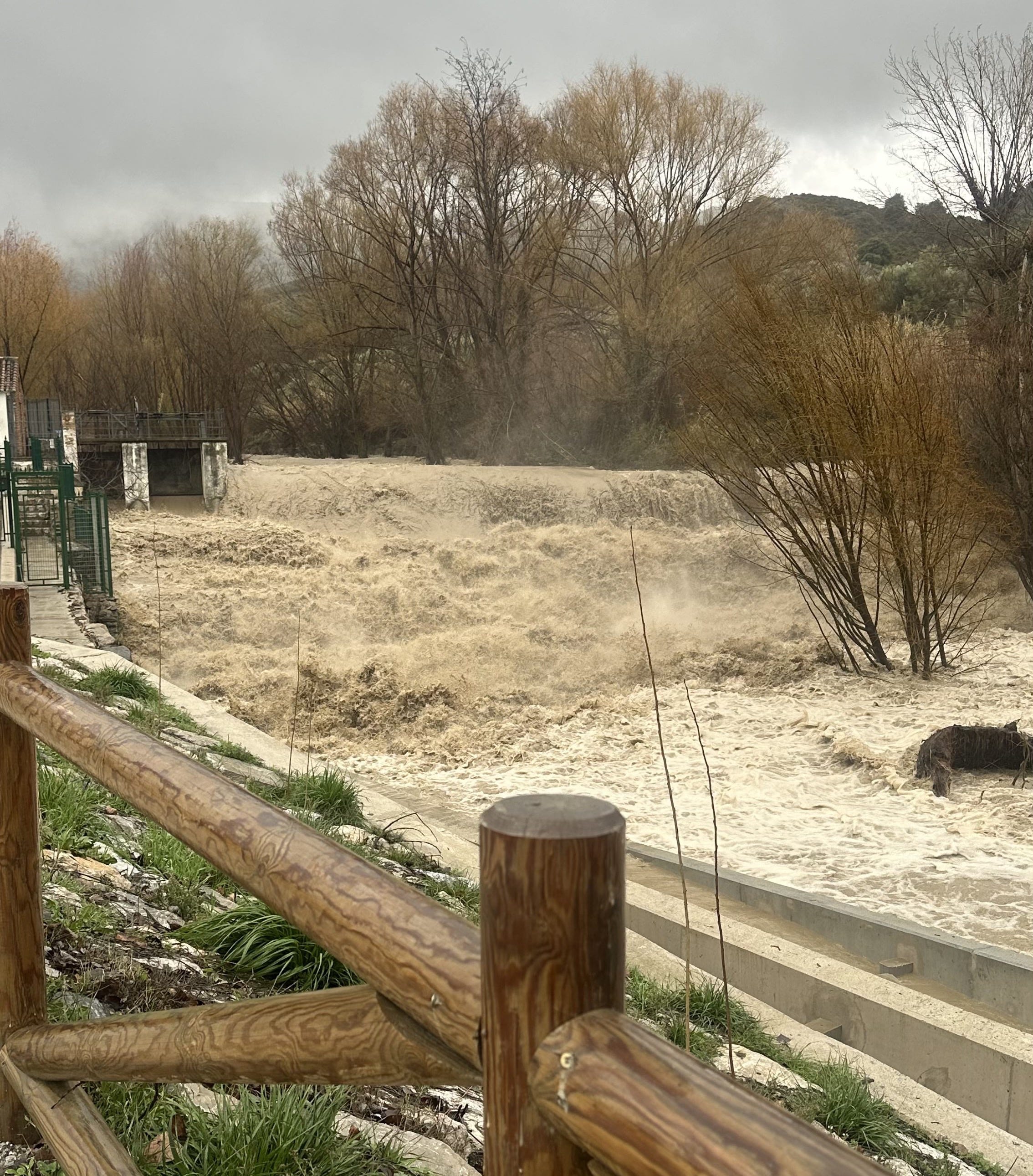
Permanence is a fragile word, dear friends. May the tragic events of this world turn us to being kinder beings. Let them soften our hearts and open up to those who need us and to those who do not. I took the image of my destroyed bridges as a sign for me to continue rebuilding myself after a couple breakdowns in the past few years.
Thank you, as always, for walking this Camino of my life with me. I am forever grateful for your support and ongoing appreciation of my words.
Margaret Gypsy
Melena – not the English for foul smelling stool!!! In Spanish, melena is a beautiful word meaning mane, and also to refer to gorgeous, long hair that falls about your face and back.
The street of the prostitutes.


 MOONINSPAIN
Leave a reply to marionvermazen Cancel reply