Pieces of my soul, and sharing one of my most treasured photos.

There are places in this world that seem to sink a fishing hook in you the first time you visit, and then it will continue to reel you back and back again for the rest of your life. Similar to catch and release, but you are never fully released.
I often reflect on what Pascal Mercier wrote in one of my favorite books, A Night Train to Lisbon. “We leave something of ourselves behind when we leave a place. We stay there even though we go away. And there are things in us that we can find again only by going back there.”
We all have places like this in our hearts. Some we visited only once, but we feel forever connected to the smells, vibration or people. And there are places that we return to over and over again without ever tiring of the colors and forms that have stolen our heart. We walk over our own footprints making them deeper and more pronounced.
Just closing my eyes, at least a dozen cities and towns come to my mind. Places where I am home, where my heart is always full.
My friend Sergio from Bilbao always says that I was born in the wrong place. That I should have seen my first light of day in the Basque Country. I hear these same words from friends in Granada, Santiago de Compostela, Lisbon, Napoli, and Cádiz. These are just a few places that I can call home.
My footprints find their ancestors easily on the sea hugging path that connects the surfing haven of Zarauz to the fishing town of Getaria. These two Basque towns are a unique braid of history, tradition, and gastronomy.
The first time I walked from Zarauz (Zarautz in Euskera) to Getaria (Guetaria in Castilian Spanish) was on my second pilgrimage to Santiago de Compostela. This northern route in Spain begins in the town of Irún near the border with France and traces the entire Cantabrian coast until falling inland after crossing into Galicia. When I did this route, it was still fairly unknown, and getting lost due to a lack of yellow arrows signaling the way was a daily occurrence.
Something about the beauty of these two towns sunk deep into my soul, and they are places that I return to as often as possible.
The eternal beach of Zarauz calls you to wander from beginning to end more than once a day. Its sand embeds itself into your skin in a way that makes it impossible to remove. Weeks after you visit you will still find grains that have been cemented to parts of your body.
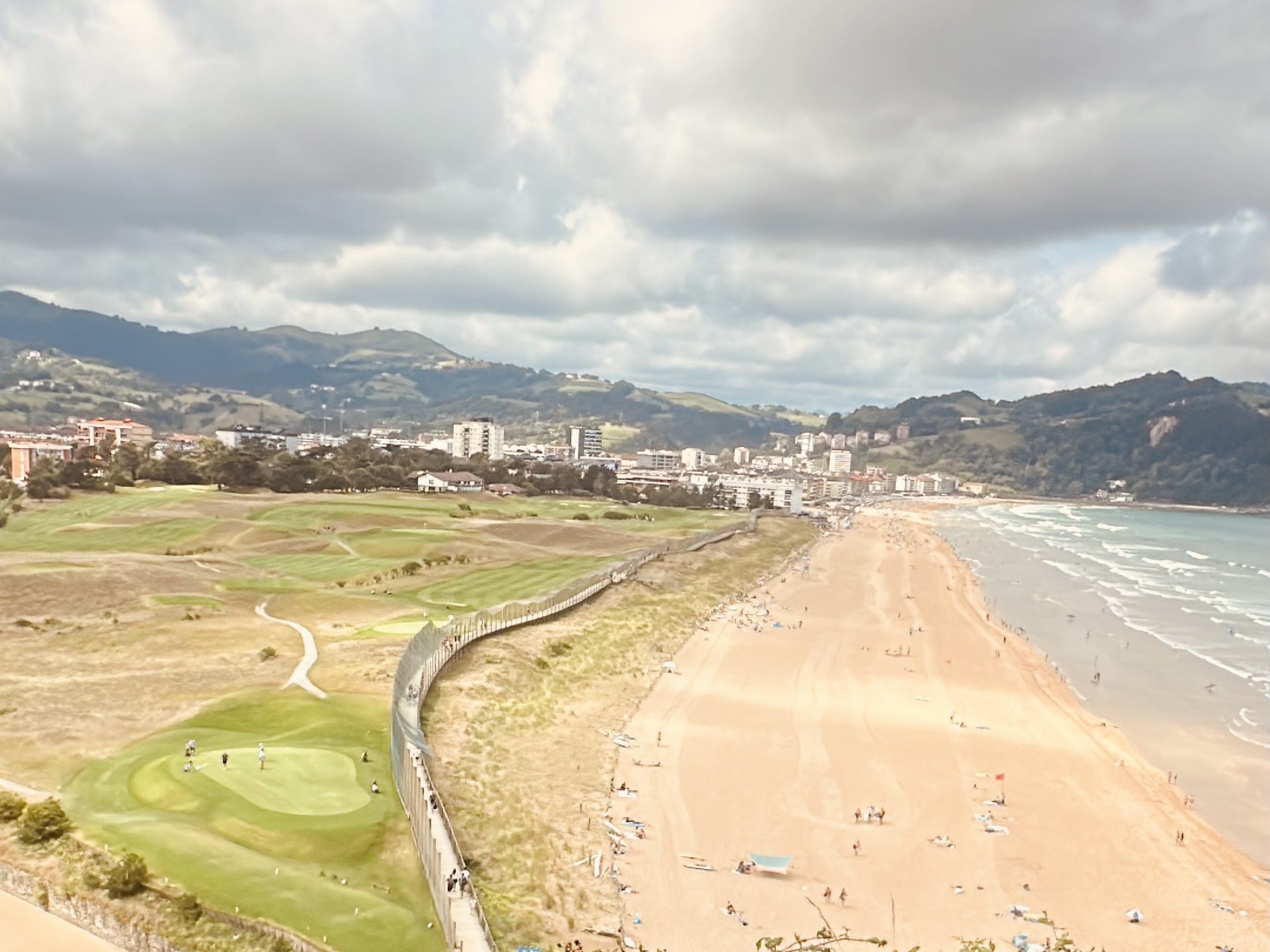
Falling in love under a shower of Txakoli, my partner and I spent a few summer days here at the beginning of our relationship. The vibration of Zarauz in the summer months is almost unsurpassable. Sleeping in a pension in the main square we were sucked into a routine of beach, pintxo, beach, txakoli, beach, music in the main square. That summer there was more than just the average summer juerga going on. A table was set up where everyone was signing a petition against the closure of an Herriko Taverna in the plaza. Herriko Taverna translates to a town bar, but in the Basque Country these Tavernas are known to be associated with the Basque Nationalist Left. There are roughly 111 of these in the Basque Country that the Spanish government was trying to shut down during a period of time. We can leave the political conversation for another moment.
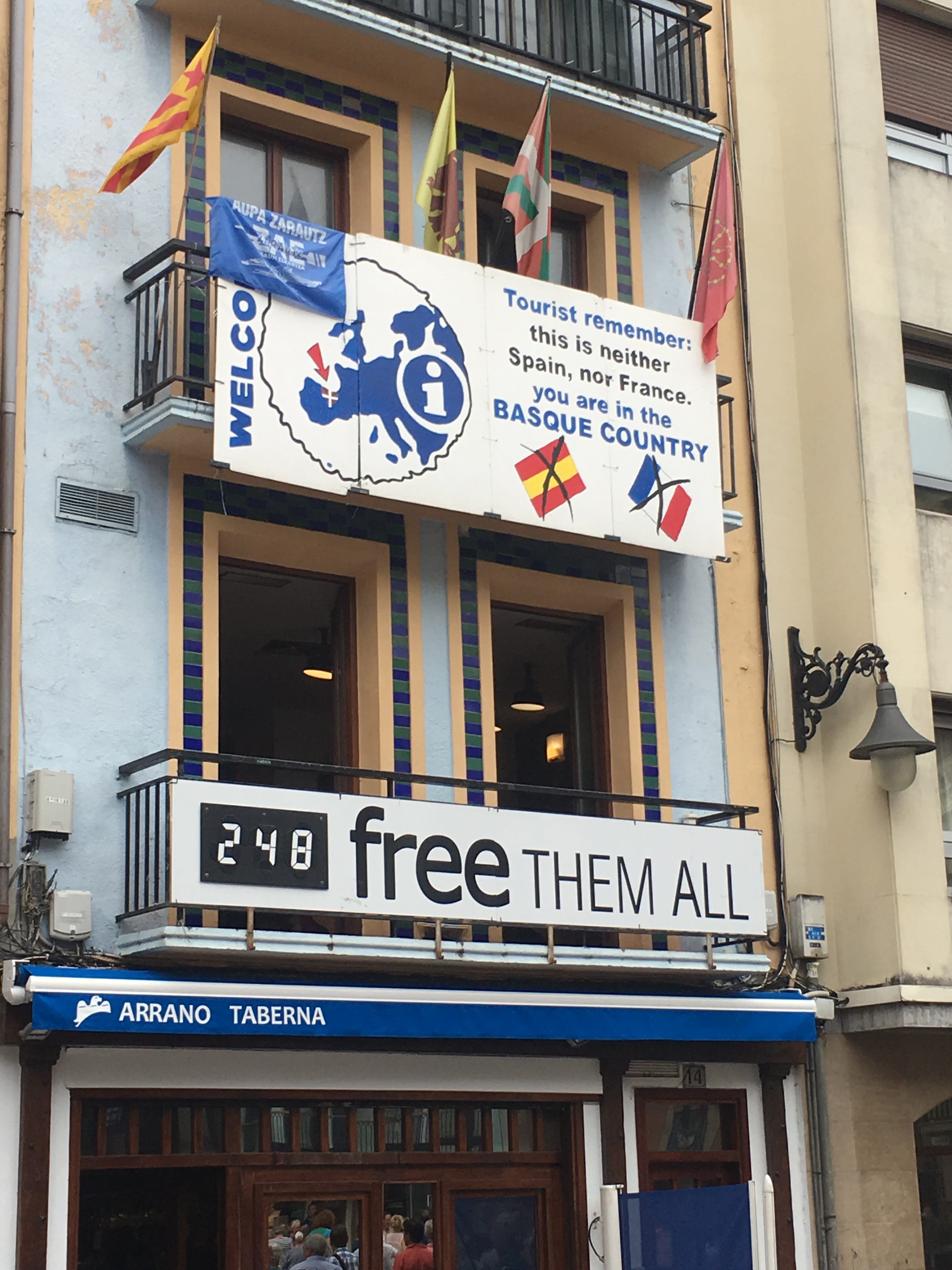
Sleeping in our hippy van, Amelie, we have spent many summer days with my daughter in this vibrant town. And this past June my niece and I were looking for a few days of relaxation after getting drunk on Bruce Springsteen in San Sebastían. Well, drunk and drenched might be a better description. Lo and behold we found ourselves sleeping in the pension of the main square which was the focal point of Zararuz’s summer fiestas. Each night a new group took the stage to enamor locals and visitors joining in on the dancing and music sung only in Euskera, the Basque language. Nobody knows how to party like the Basque people. Don’t even try to debate.

Let the Cantabrian sea pull you close and you make your way along the footpath to Getaria, just over four kilometers away. The sea spray cools the summer sweat on your face while you look out and observe a few spearfishers searching for scorpion fish or seabass.
Getaria is the birthplace of Juan Sebastian Elkano who completed the first circumnavigation of the earth on the Spanish ship named Victoria. For those travelers out there, you can now visit a replica of the NAO Victoria that is permanently placed in the Guadalquivir river in Sevilla.
I have an obsession with the fishing industry and I am pulled into every port town that I get close to on all of my travels. I am also a believer of learning the history and livelihood of a place by speaking with those who will always tell the story better than a book ever will.
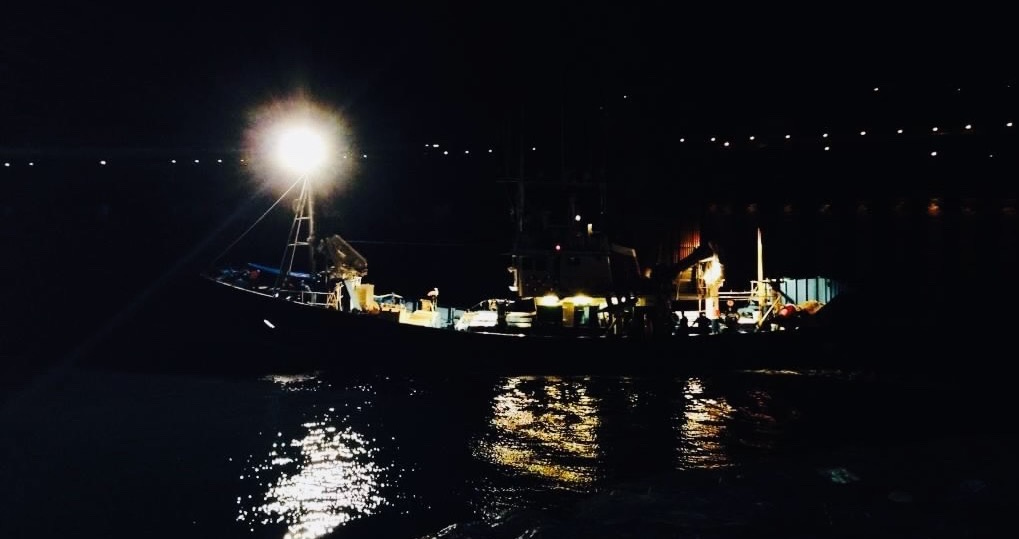
One summer in Getaria, strolling through the fishing port, we noticed that seven large fishing boats had appeared from one day to the next. A conversation with an eager to share fisherman fulfilled lingering questions that had accumulated in my fishing consumed mind. The ships were to set sail again the following evening at 23:30 pm and they would be out at sea for at almost thirty days. It was late August and in order to catch the albacore tuna, they would have to go much further north.
I have studied substantial about the history of Basque whaling and fishing culture, but first hand information about present day life for them is what I seek nowadays. Respect is what I fell during these conversations.
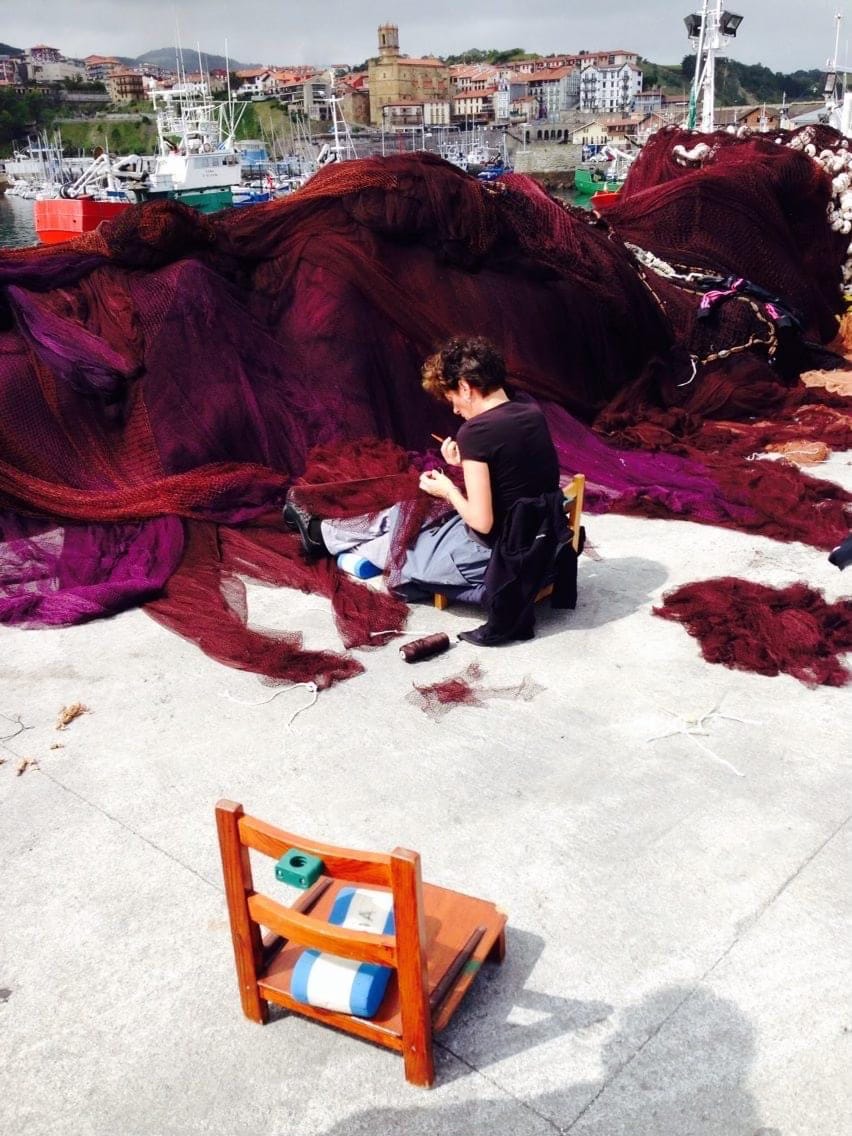
As we continued our walk through the port I spotted a woman mending the fishing nets. Starstruck at her almost meditative state, I was compelled to ask if I could take a photo of her. My heart leaped into my throat when she stood up to hug me, and then thanked me for giving her a moment of rest from this tedious work.
The sun had set over the sea the next evening as I watched some of the fishermen loading potatoes, onions, and choricero peppers onto the boats. These are the ingredients to prepare Marmitako, one of the traditional tuna stews that was only prepared on the fishing boats in the past, and is now enjoyed at home and restaurants.
A bus pulled up straight to the docks, and off jumped dozens and dozens of men who scattered faster than free love to their designated ships. Many fisherman in the Basque Country are from Senegalese decent and are just as part of the Arrzantzale as those from the Basque country. Walking down the street in any Basque city or town you will find a generation of children from Senegal or other African countries, speaking fluent Euskera, and who are considered Basque.
One by one, the fishing boats left the port. Sadness overcame me as I thought of each man saying farewell to his loved ones before sailing off into the faraway seas.
Both Zarauz and Getaria have sunk a hook deep into my heart. I will find any excuse to visit in every season. Thank you for walking with me on this journey of life. I have many experiences of the fishing culture as well as unforgettable meals that are connected to them.
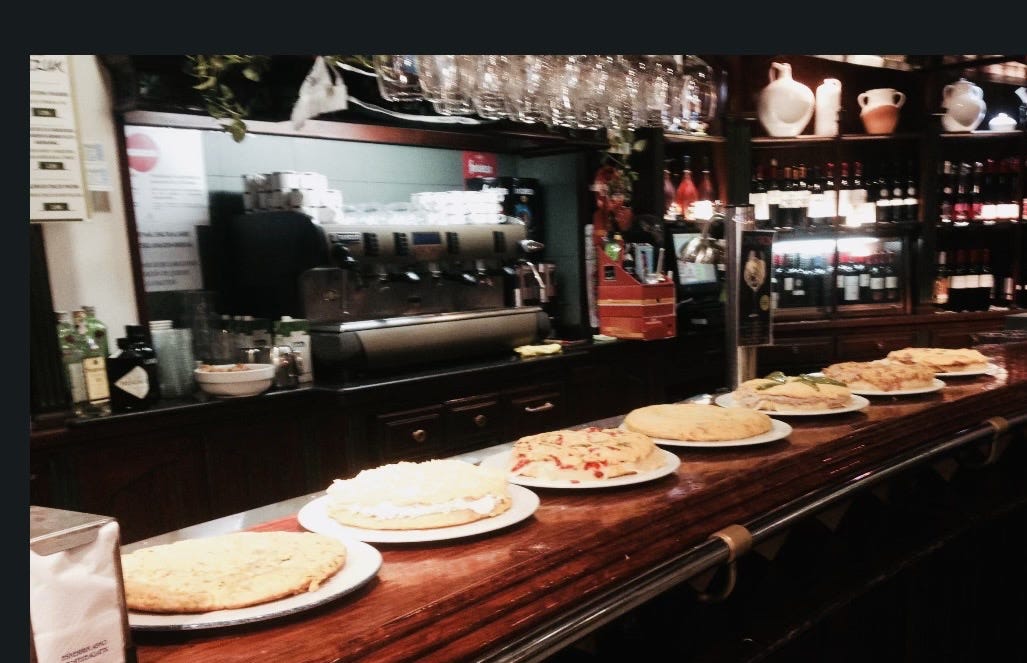
Here I leave you a photo of my favorite time of day in one of the best pintxo bars in Zarauz. ON EGIN!!
All photos are my own, and I share from thirty years of life experience in Spain and Portugal.
Juerga – partying hard with many drinks
Arrantzale – Basque fishermen
Pintxo – small portions of food in the Basque Country that should touch all five senses
Txakoli – white wine from the Basque Country. See my last article.


 MOONINSPAIN
Leave a reply to Nancy Karam Cancel reply