Recently I posted an article about one our lesser known holidays here in Granada, El día de la Toma de Granada. At the end of the article I shared one of my all time favorite tapas and mentioned the connection of pork with the expulsion of Jews and Muslims from Spain. The article is named Choosing Acceptance.
After the Alhambra Decree was passed on March 31st, 1492 the process of conversion or exile began for hundreds of thousands of Jewish and Muslim people. For those who chose conversion along with the opportunity to stay in their own homes and towns faced years of discrimination and suspicion by those who were considered pure of blood, or old Christians. They lived a life of constant surveillance about how they lived their lives and if they had fully accepted this conversion to Christianity.
Many “New Christians” chose a double life of living as Christians on the cover of their books and practicing their religions inside the unseen pages, in hope to not be discovered. There are many layers and facets to this history of forced conversions and the Inquisition that I am not going to discuss here. Feel free to sign up for one of my tours and we can dive further into this gut wrenching topic.
One of the easiest ways to know whether a Muslim or Jew had fully converted to the new religion was by what they consumed in their homes and when sharing neighborhood meals and customs. Not eating pork products was the most obvious, but not only way to provoke fingers being pointed to a New Christian.
The Sephardic Adafina, a garbanzo and lamb stew, prepared for the Sabbath, was turned into the Spanish cocido or puchero which is filled with pork products.
In Portugal, converted Jews invented a sausage called Alheira which perfectly resembles a regular pork sausage but was prepared with chicken, other game and bread.
Even cilantro was a true sign that someone was still preparing their traditional Sephardic recipes. Still today you will not find cilantro in Spanish food even though it is commonly used in Portugal.
Matanzas, or pig slaughterings, were and still are a common winter practice in many towns in Spain. They tend to be social events involving several families, or even the entire town. There is much wine to be had as people work for hours, after the slaughtering of the hog, to prepare the different products such as blood sausage, chorizo, salchichón, legs to be cured and many other porky delights.
Years ago, I stood alongside my ex’s mother, grandmother, aunts and female cousins as we stuffed the black substance into the freshly cut intestines. I can close my eyes and still smell the onions, cumin and spicy paprika sautéing in massive pots to prepare the blood sausage, morcilla. Everyone had their own job during the time of the matanza, and the goods were split up between all the family members.
The participation in this event each winter was essential to prove one’s conversion to Christianity during the 15th and 16th centuries. The saying “mas fieles hizo cristianos el tocino y el jamón que la Santa Inquisición1” is not a joke, nor is it funny. When one is deprived of their traditional food and familiar customs, one is deprived of the thread to those who came before them.
In Granada and a few other places in Spain, we celebrate San Antón, Saint Anthony, during the month of January. The actual day is January 17th but we extend it to the weeks preceding and following the actual saints day.
Saint Anthony the Great was the protector of animals, farmers and butchers amongst other things. This holiday for us revolves mostly around the preparation and consumption of the Olla de San Antón. It occurs during the time of the matanzas in most towns. Another saying says, “En llegando San Antón, pocos cerdos ven el sol2”.
This is a ritual shared with families and friends in many restaurants and homes in and near Granada. Most of us have a restaurant that we go to every year with the same crowd of people. Due to the heaviness of the meal, it is normally consumed once during this time period. However, you are usually lucky to also be served a tapa of the stew in a bar or restaurant where it is being prepared. It is meant to warm your bones during our long winters.
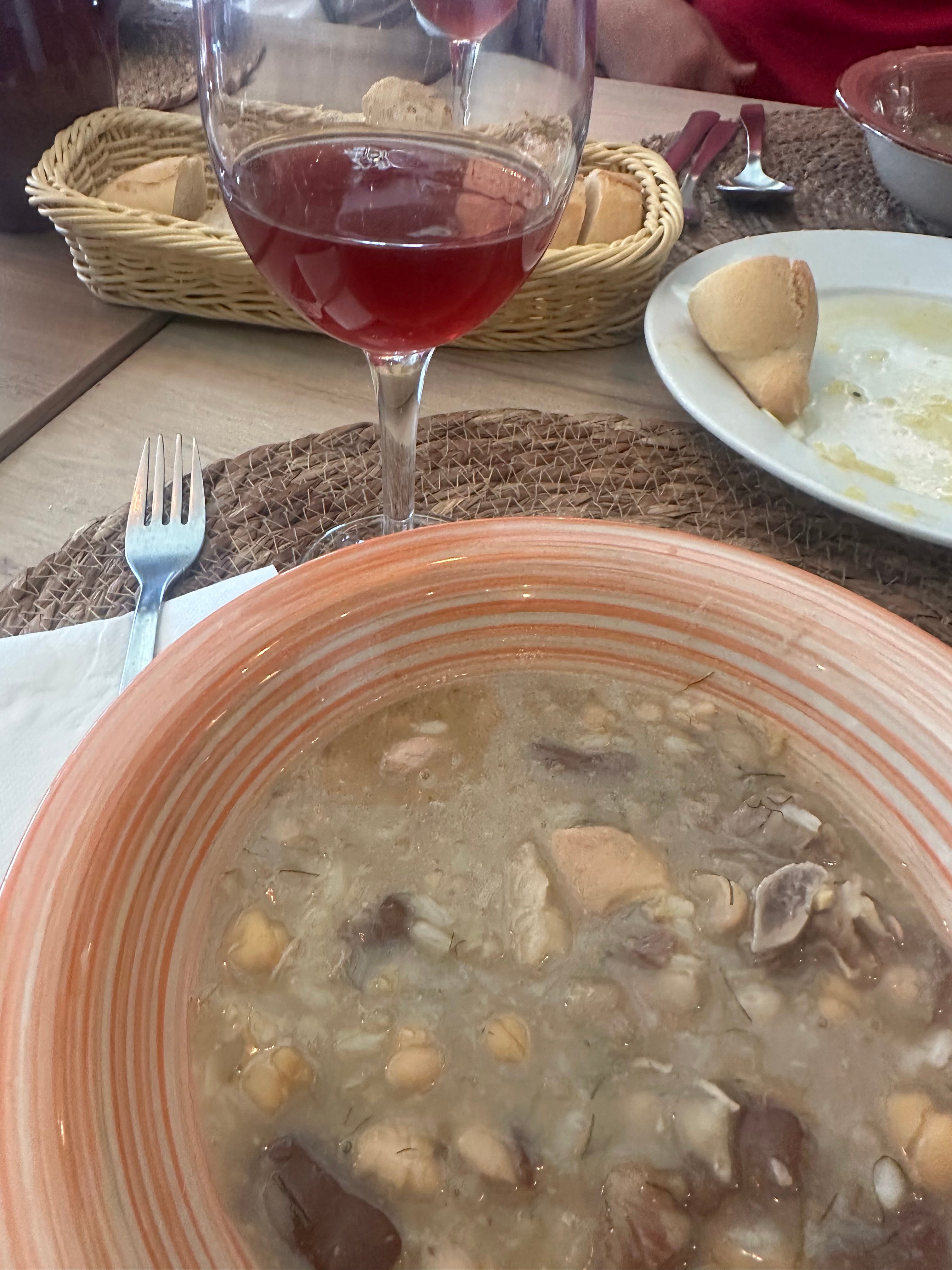
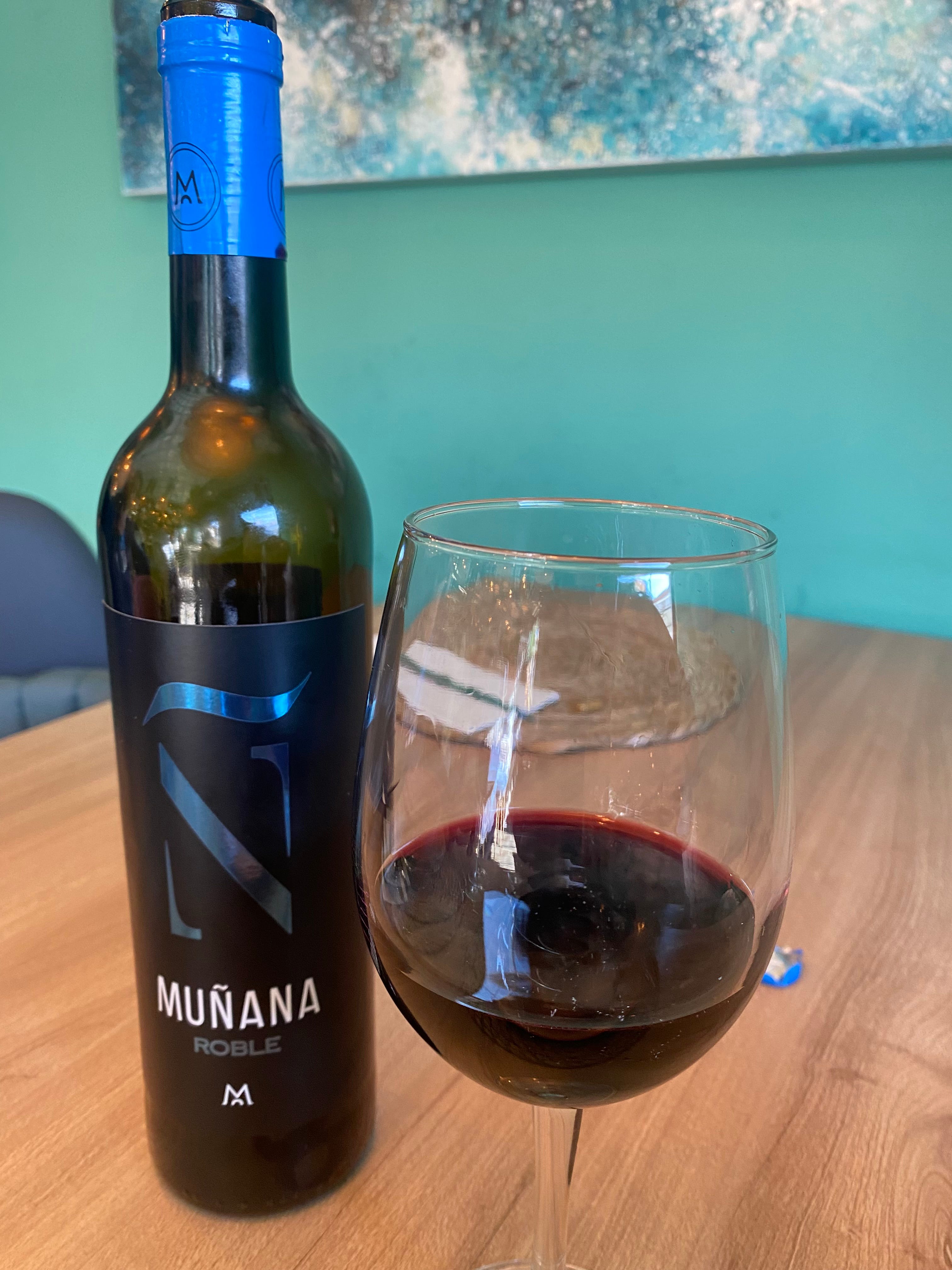
To begin the meal you are served the local young wine that has been produced from the recent harvest. We call it mosto or vino costa. It is pink in color, a bit sweet and quite strong. We usually enjoy one jug of this and then order a bottle of local red.
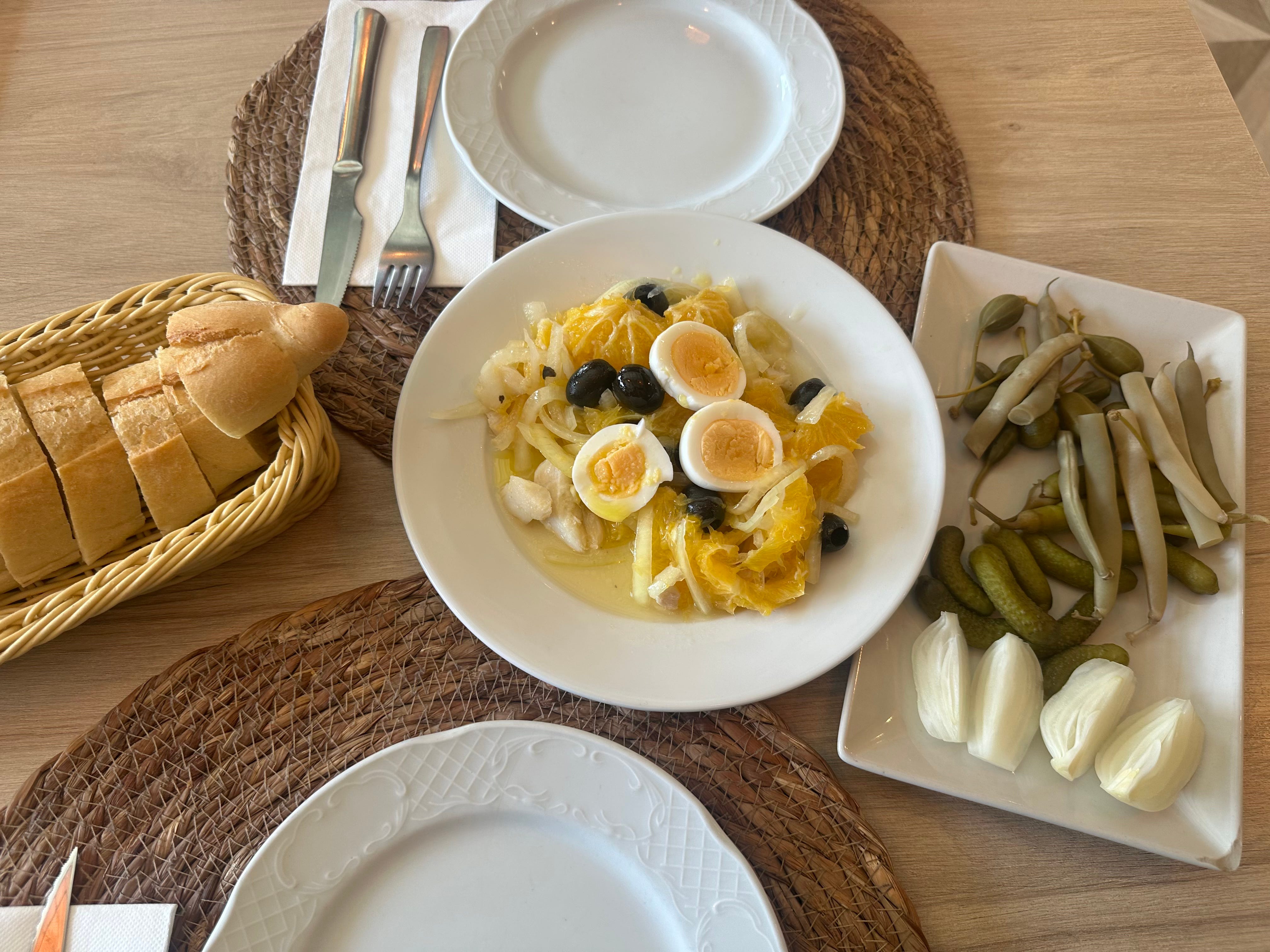
The first course is Remojón Granaína, a salad prepared with salt cod, orange slices, boiled egg and black olives.
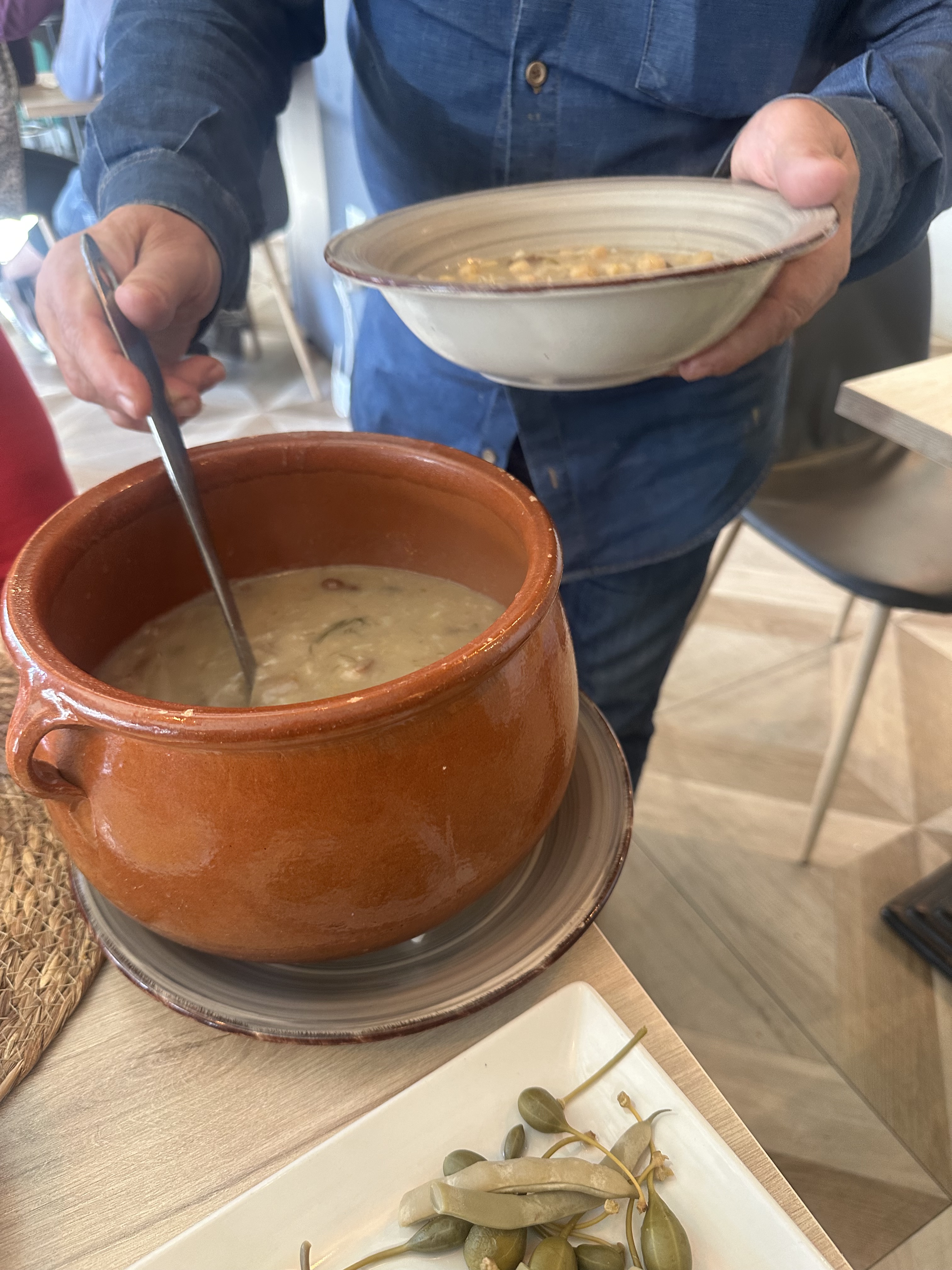
After the salad comes the massive clay pot of the stew. Hence the name, Olla de San Antón. Olla=pot. In the olla you will find dried fava beans, white beans, garbanzos, rice onion, fennel, and bits of the meat that were cooked along with these ingredients. A plate of encuritdos, pickled vegetables, is always served to aid in digestion.
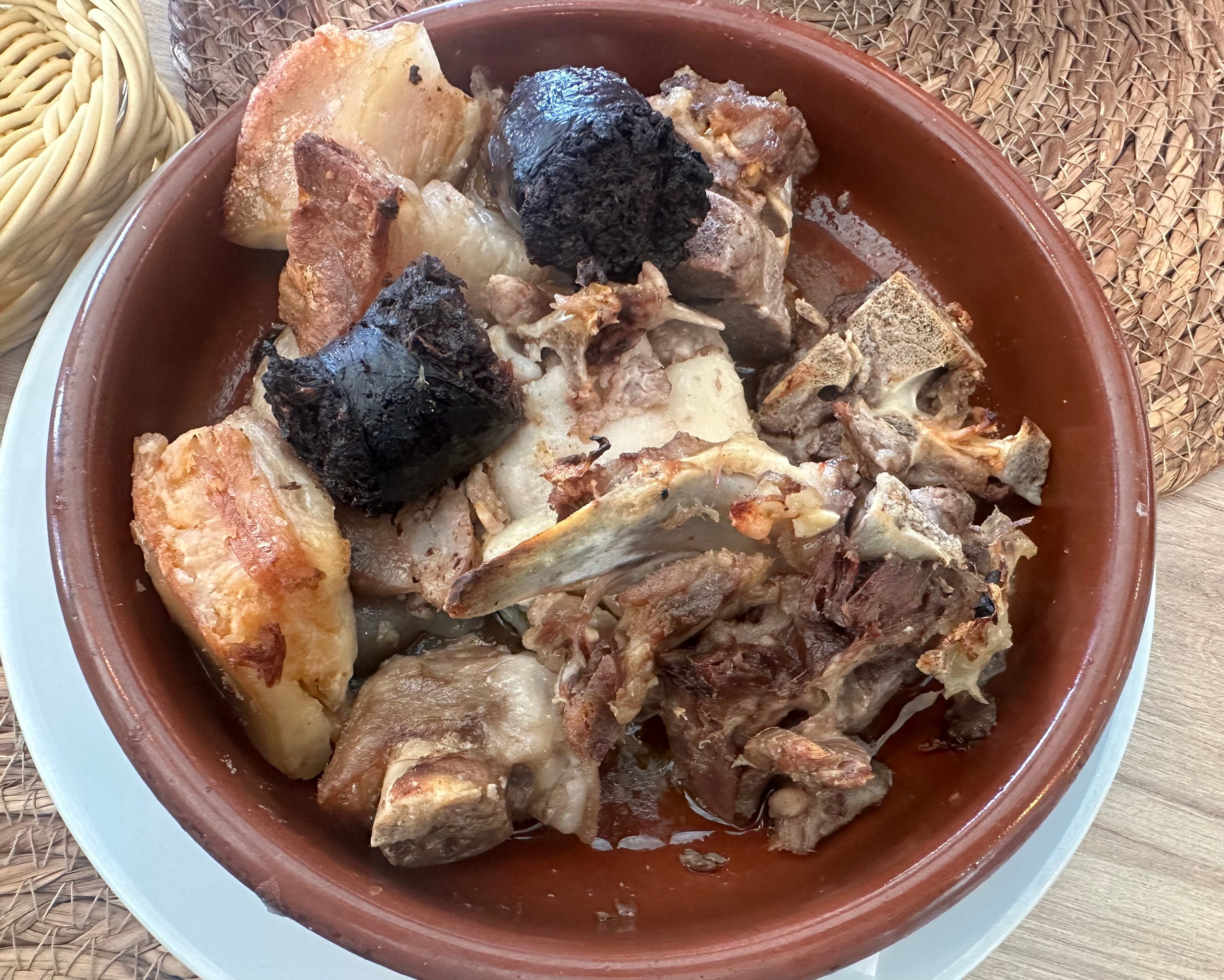
Once you are near explosion, the final plate arrives. This dish includes all the meats that were cooked along with the olla, filled with juiciness and love. They include fatty bacon (tocino), pig trotters, tails, snout and ribs along with the backbone and blood sausage. In all honesty, this is the hardest part for me. I pick around for the meatier pieces and the blood sausage and then let my amigos have the rest!
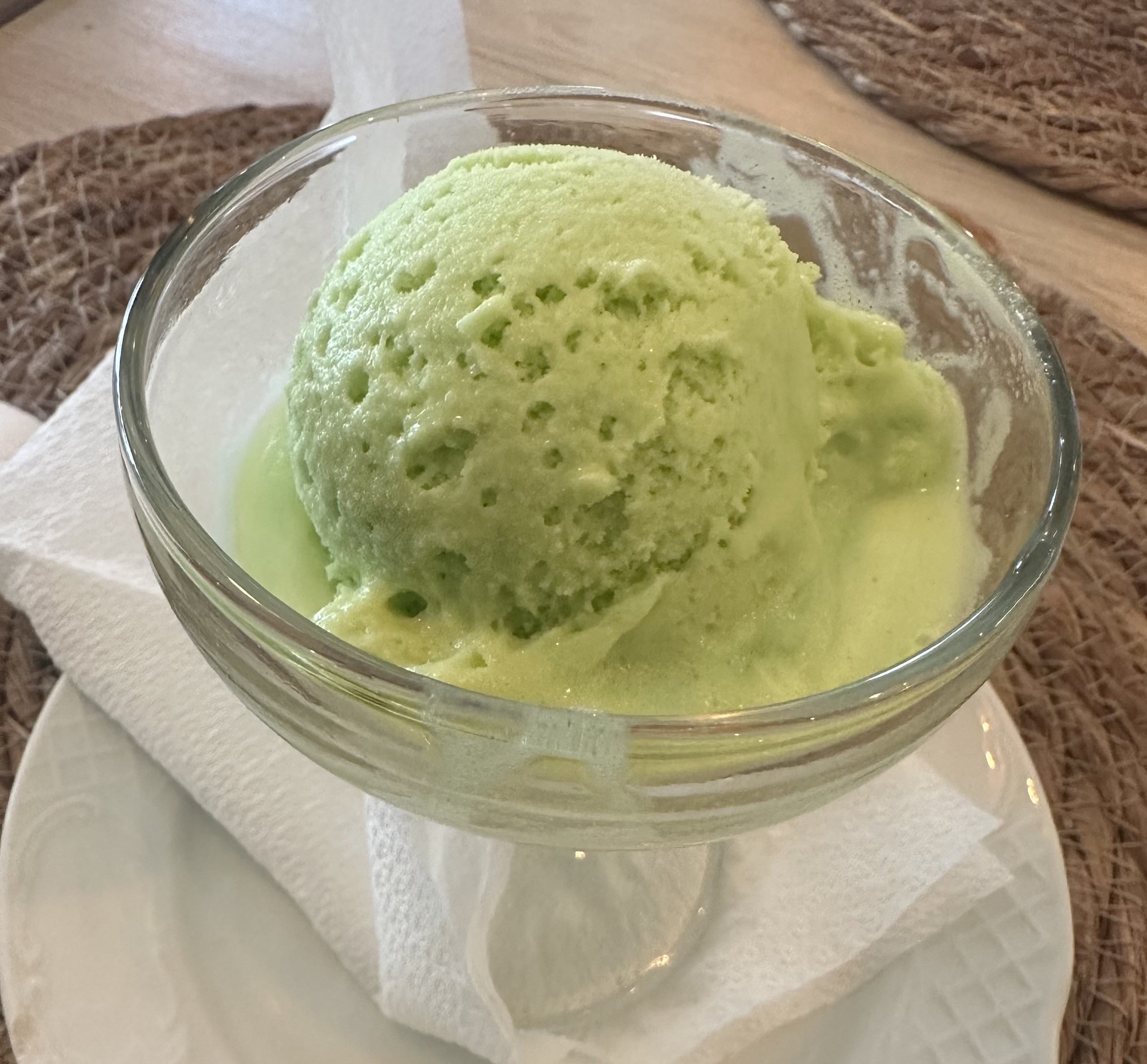
The dessert at our favorite place to have the Olla de San Antón is one of the best things to touch my palate in a very long time. Sorbete de Mojito. A homemade mojito sorbet. The other day we all finished it in two minutes flat and looked around to see who was capable of ordering another round. Who knew we could even fit one tiny bit of food into us after that meal.
This year’s Olla was particularly special because it was shared with close friends and family that were visiting from out of town. It is a ritual and tradition that isn’t well known other places so it is always fun to share the history and meal with first timers.
The Olla de San Antón originated to celebrate the day of Saint Anthony, but knowing the history of food in this area, it is difficult to not make the connection to the grim history that still walks with us today
Thank you, as always, for walking this Camino with me. I am eternally grateful for the time you take to read my banter.
Bacon and ham converted more people to Christianity than the Holy Inquisition.
As Saint Anthony’s day nears, few pigs see the sun.

 MOONINSPAIN
Leave a comment