When building human bridges is more important than hygiene.
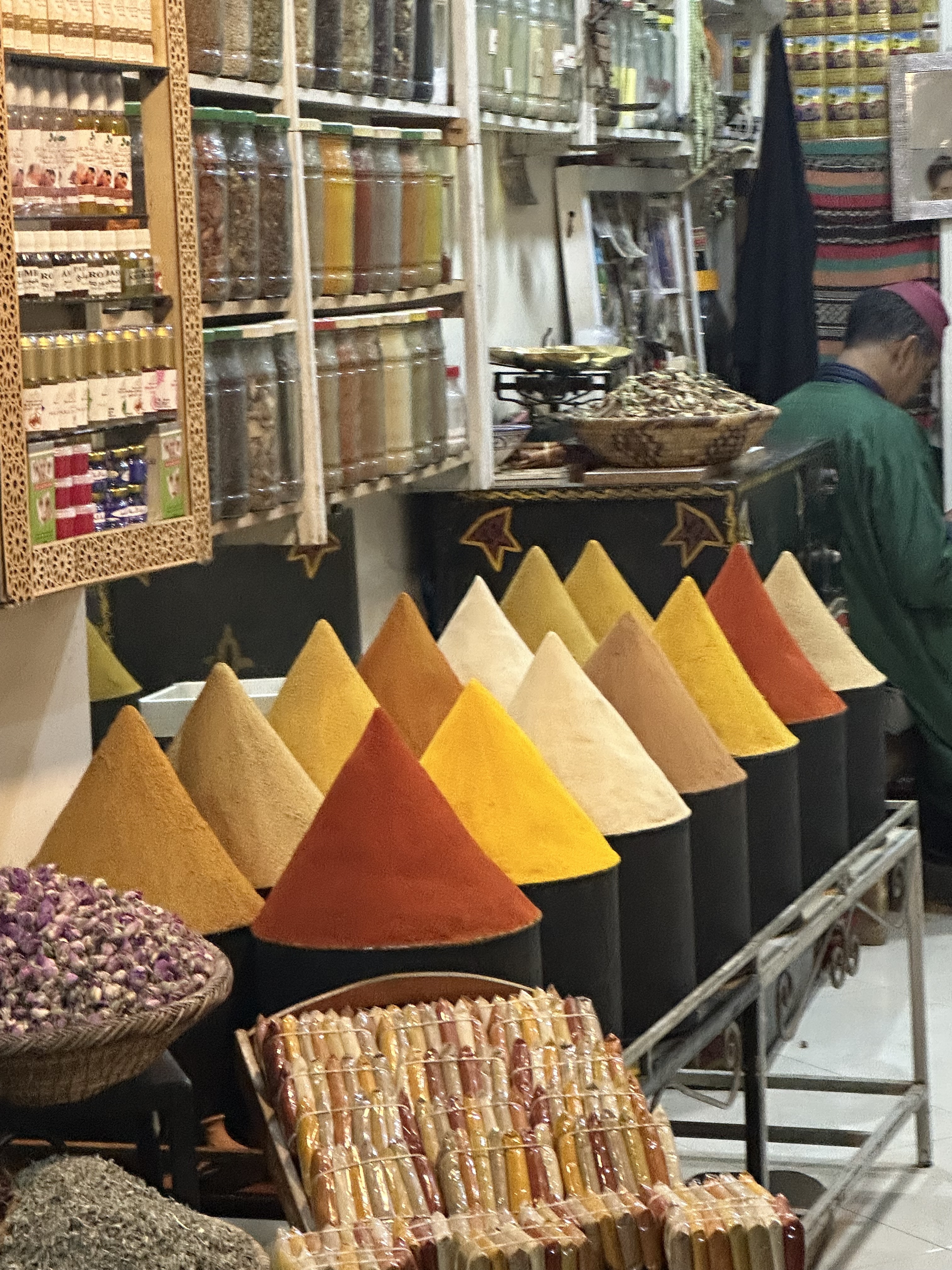
Do you remember the first morsel or meal you tasted when entering a new country or region? The aromas, preparation and local rituals. For me, it is the moment when my body and soul first recognize that I am in a new place.
Relationships with places or countries can be equally as frivolous or intense as our connections with other beings. My bond with Morocco is one that began with my left foot being pulled into quicksand while my right foot tried to defy the inevitable. It continues as a thirty year entanglement of sensory overload and desert calm. We have grown up together, al-Maghrib and I. This sacred place where the sun sets. A clash of Mediterranean and Atlantic breezes, dark nights in the Sahara, and the towering Atlas and Rif mountains. The first time I met you in 1995 (deserves its own post), you hoovered me in and then spit me back to Spain smelling like hashish and musk, with my hair in dreadlocks and the bottoms of my overalls caked with mud.
Our relationship improved greatly from that moment. Not that it was a negative first experience, but we can refer to it as hectic and immersive. Years of visiting you for work and personal travel deepened our knowledge of each other until a mere acceptance turned to passion. Quite possibly bordering on obsession from my side.
There was a time when I could not get enough of you. I became a common face to those checking passports in Tetouan and Marrakech. I studied Islam, its religion, art, and architecture. I learned Arabic and immersed myself in your culture and traditions. A three year relationship with a man from Fez showed me the entrails of your world. Sharing family meals, partaking in strictly female conversations at home and in communal ovens, and observing Ramadan three times opened my eyes to the deepest part of your deep blue yet dusty interior.
There is a food that has accompanied me as my favorite Moroccan meal throughout all of these phases of our relationship. The first time I tasted it was in Chefchaouen, a beautiful town in the Rif mountains. After an extremely harried trip without sustenance, my friend Rose and I stumbled off the bus along with 30 Moroccans, three chickens, and a goat. A man in the parking lot was shoveling out bowls of a beige liquid out of a massive pot into ceramic bowls. For one dirham each he passed us a steaming hot bowl drizzled with olive oil and sprinkled with cumin and cayenne pepper along with a basket of bread. In 1995 one dirham may have been worth about 45 cents (US) The intoxicating smell of green olive oil mixed with the cumin sent me straight to Jannah, the Islamic paradise. In this dusty parking lot I had found the garden of eternal bliss.
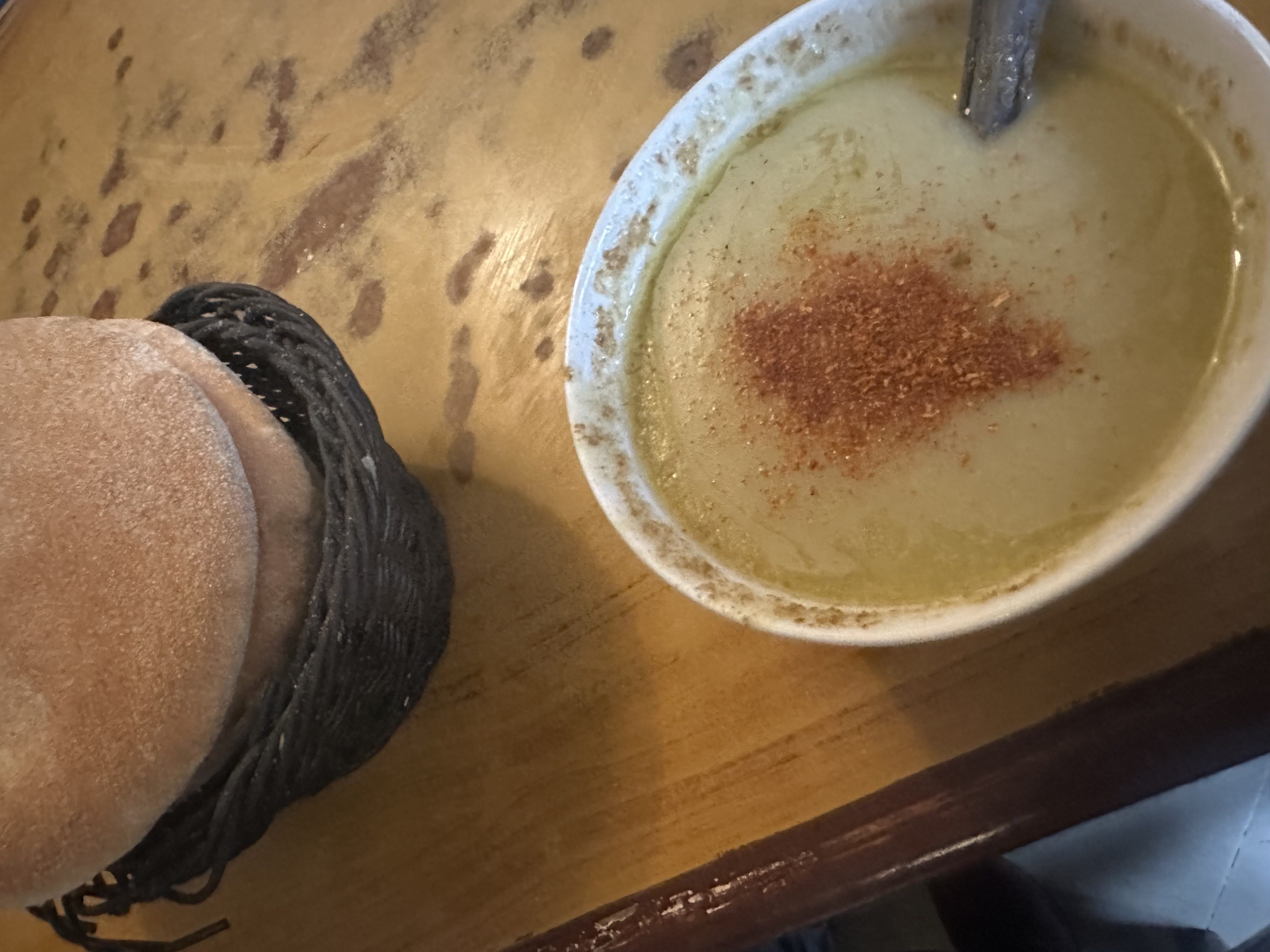
This was my first introduction to BISARRA, a hearty puree made with either broad beans or split peas. Bisarra originates from Egypt where it can be eaten either for breakfast or as part of meze. The dish eventually made its way to North Africa and Al-Andalus sometime in the 13th century where it was, and still is today, taken as a hearty and affordable breakfast or anytime soup. It is prepared with olive oil, garlic, cumin, salt and paprika. I have eaten Bisarra during every season but it is especially tummy warming in the colder months and in the mountainous areas.
Until last week, my favorite Bisarra memories were the first bowl in Chefchaouen and the ones I have eaten at small stalls along highways while traveling through Morocco with family or friends.
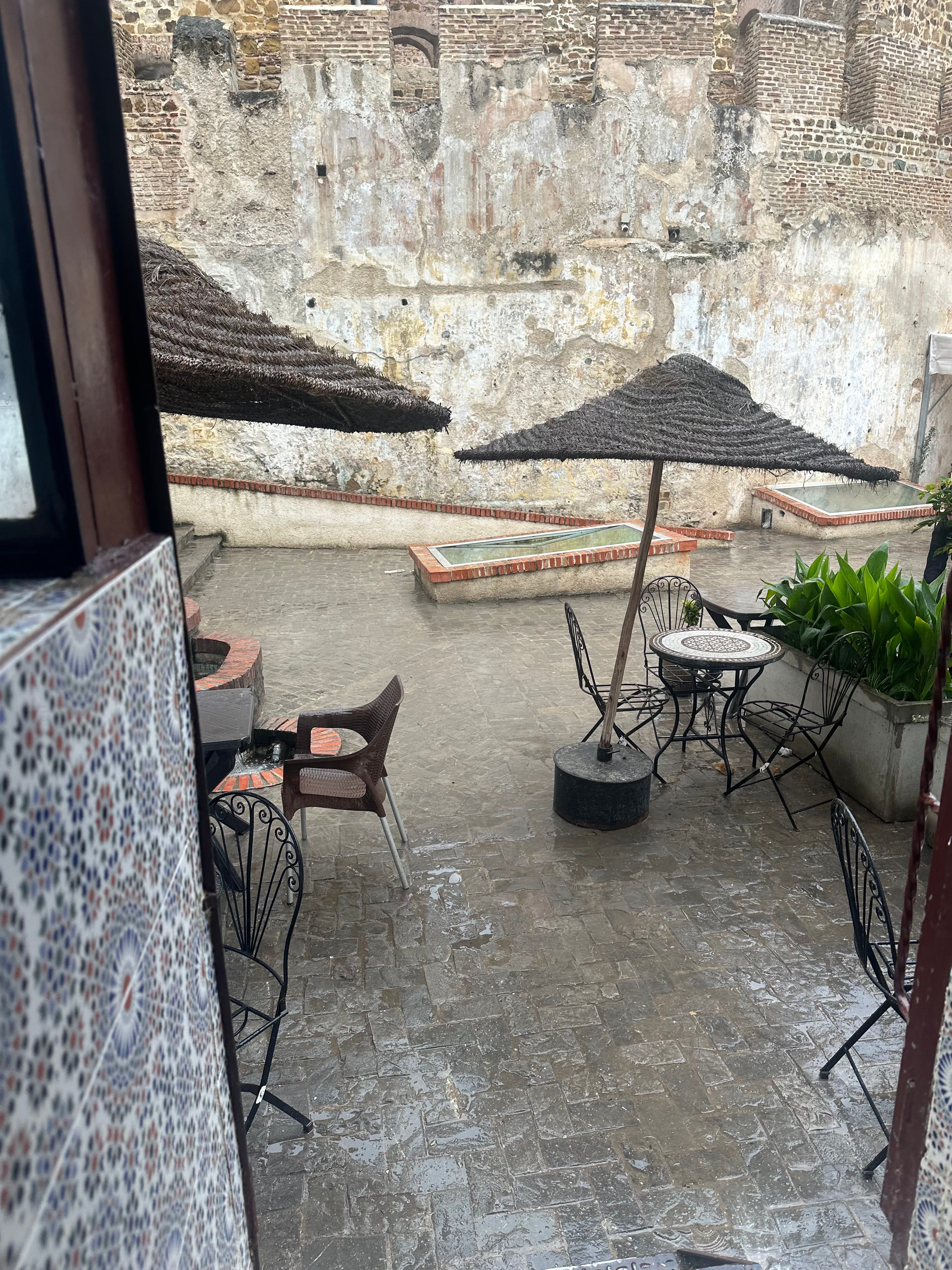
When I am in Morocco I follow my nose to the Bisarra vendors. It has such a specific aroma that it is almost impossible that your senses will be deceived. Bisarra is earthy and pungent and impregnates its corner of the street with the dusting of cumin powder. I cannot leave Morocco without at least one dose of Bisarra.
Last week, on our last morning in Tangier, we were wandering through the rain on our way to Tangier American Legation Museum which my partner had never visited (highly recommended btw). My nose stopped dead in its tracks when it discovered the smell of Bisarra in the air.
As we stepped in onto the sawdust covered floor we were immediately greeted by the owner with a huge smile and right hand placed on his chest, a common greeting in Morocco. He quickly led us to the only available spots on the two communal wood tables in his modest Bisarra stall. A warm Salam1 greeting was shared from all diners as we were served our bowls of bisarra.
Two young girls eating with their parents stood up to walk closer to me, sharing beaming smiles and telling me Bsmillahand Saha2. There is an affinity between women and girls in Morocco that is both soft and strong as steel.
What occurred in the next twenty minutes will stay with me for the rest of my life. Two young gentlemen sitting next to us quickly became friends as they offered us their own homemade olive oil, both with and without garlic, to drizzle on our Bisarra. Conversation flowed easily as we discussed small olive oil production experiences since we also do the same on my father in law’s land in Portugal. Another gentleman sitting across from us requested an empty glass to share his glass of steaming hot tea. The owner consistently smiled at me touching his heart, signifying both gratitude and good health.
The young men had brought their own eggs which the owner prepared for them and they in turn offered to us, of course. The men lived outside of Tangier but drove into the city various times a week just to have breakfast here.
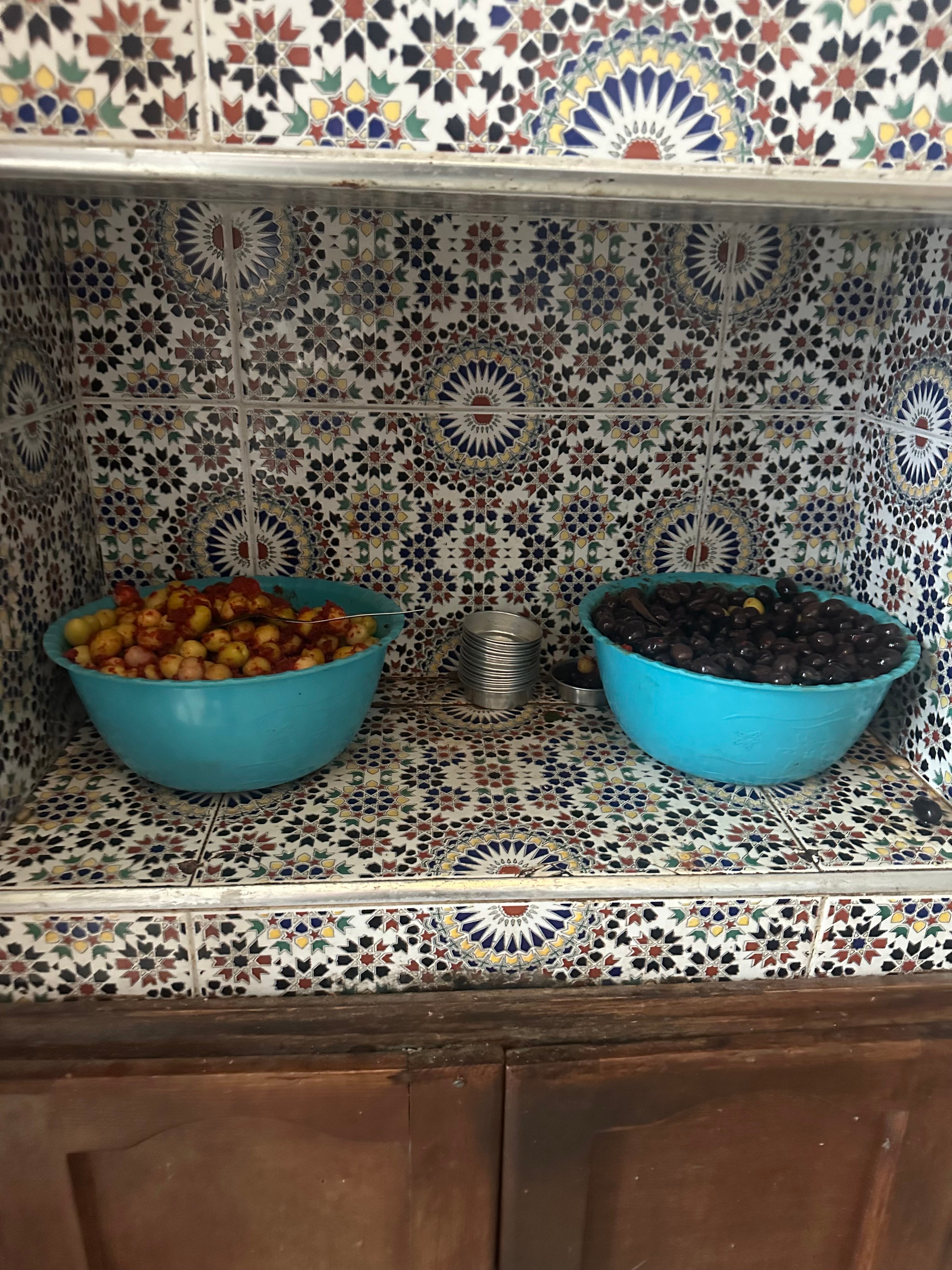
The owner brought me over to the self service olive display which, along with pickled hot peppers that magically appeared, rounded out this beyond perfect breakfast.
As I wiped up the last bits of my bisarra with the soft bread I noticed the slightly soiled spoon that I had used briefly. In a country where food should be consumed with your right hand and pieces of bread, who would even care about the state of a spoon? I certainly did not. The joy that these people brought to my soul over the most humble of breakfasts was worth more than I could ever repay.
It is in these moments of breaking bread, and sharing soft smiles and conversation that we restore our faith in humanity.
Salam, meaning peace, is a common way to say hello to others.
Bsmillah – said at the beginning of an undertaking or before eating. Saha- used to say “enjoy” when someone is eating or when someone has a new piece of clothing or a haircut. Or after a shower or bath.

 MOONINSPAIN
Leave a comment